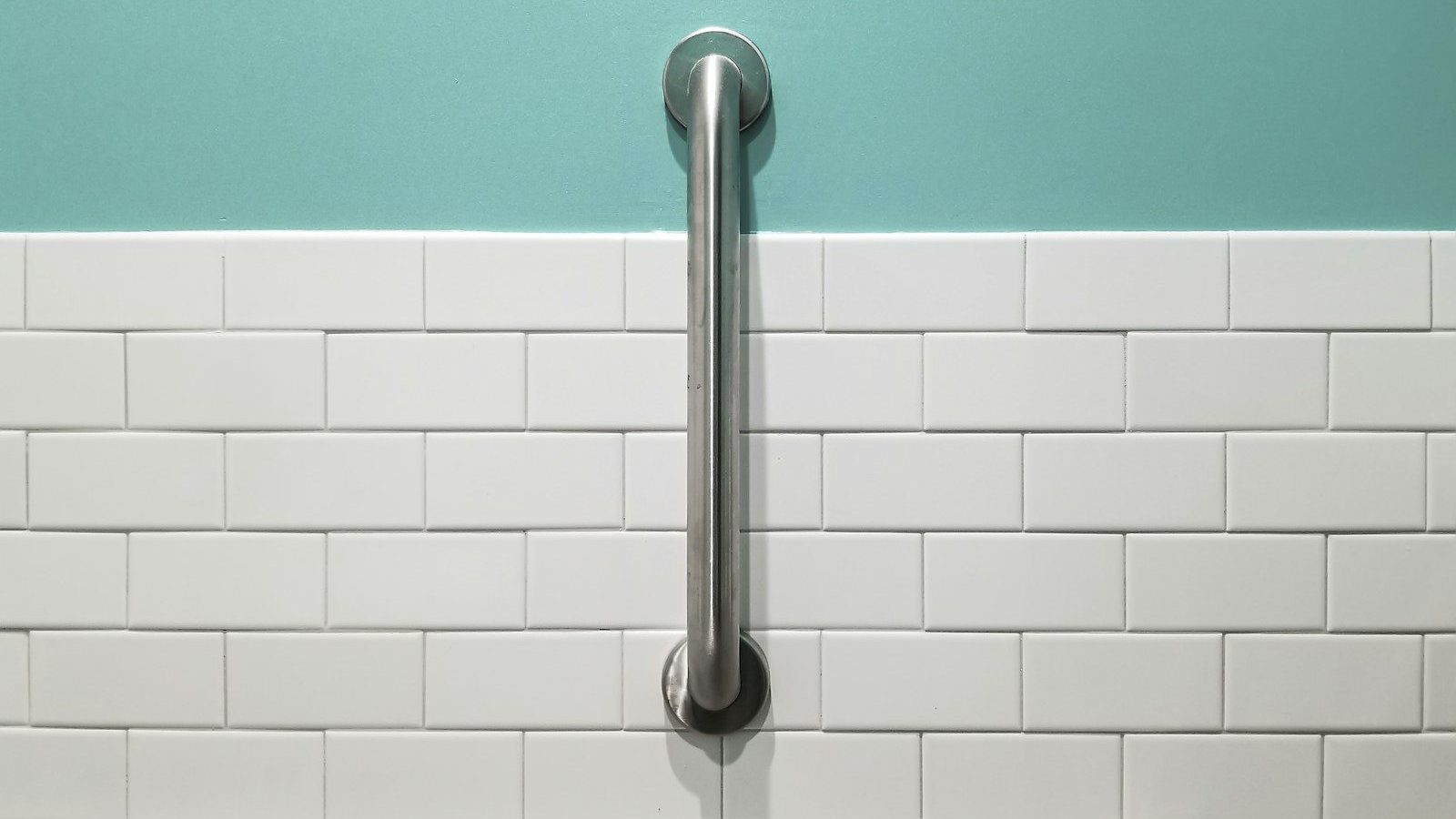
A grab bar in the wrong place doesn’t help much. The right spots are wherever the person using the shower steps in, sits down, stands up or turns around, because those are the moments they shift their weight.
This guide from Big Easy Bathrooms covers the placements and heights that help most, drawn from the ADA’s rules for public buildings, plus what to plan while the wall is still open.
Where should grab bars go in a shower?
At the entry, along the wall with the controls, along the back wall and beside the seat. Those are the places people reach for when they step, turn or sit.
For a transfer shower, the 36-by-36-inch kind where someone moves from a wheelchair onto a seat, the ADA Standards place bars across the control wall and along the back wall to a point 18 inches from the control wall.
For a standard roll-in shower with a seat, bars go on the back wall and the side wall opposite the seat, never above the seat itself. Without a seat, they go on all three walls.
How high should a shower grab bar be?
The 2010 ADA Standards set horizontal grab bars 33 to 36 inches above the floor, measured to the top of the bar.
Those grab bar rules are written for public buildings and businesses, not private homes, so treat the range as a starting point. A shorter or taller person, or someone who uses a wheelchair, may be better served a little higher or lower.
The best test is simple: have the person who’ll use the shower stand, sit and reach where the bar will go, before anything is drilled.
What makes a grab bar safe to lean on?
Its size, its gap from the wall, its strength and what it’s anchored into. A bar is only as strong as the wall behind it.
| Feature | ADA figure | Why it matters |
|---|---|---|
| Height | 33 to 36 inches to the top of the bar | Within reach whether you’re standing or lowering yourself |
| Diameter | 1¼ to 2 inches for round bars | A size a hand can wrap around firmly |
| Gap from the wall | Exactly 1½ inches | Room for fingers without trapping a hand or arm |
| Strength | Withstands 250 pounds of force | Holds when someone leans hard or catches a slip |
The bar also shouldn’t spin in its fittings. A bar that turns under a wet hand gives no support at the moment it’s needed.
Do you need a vertical grab bar at the shower entry?
The ADA Standards don’t require one. At home, though, a vertical bar at the entry gives a natural handhold for the moment you step in or out.
Stepping over a curb or onto a wet floor tests your balance. A vertical bar lets someone steady themselves with an upright grip before they let go of the door frame.
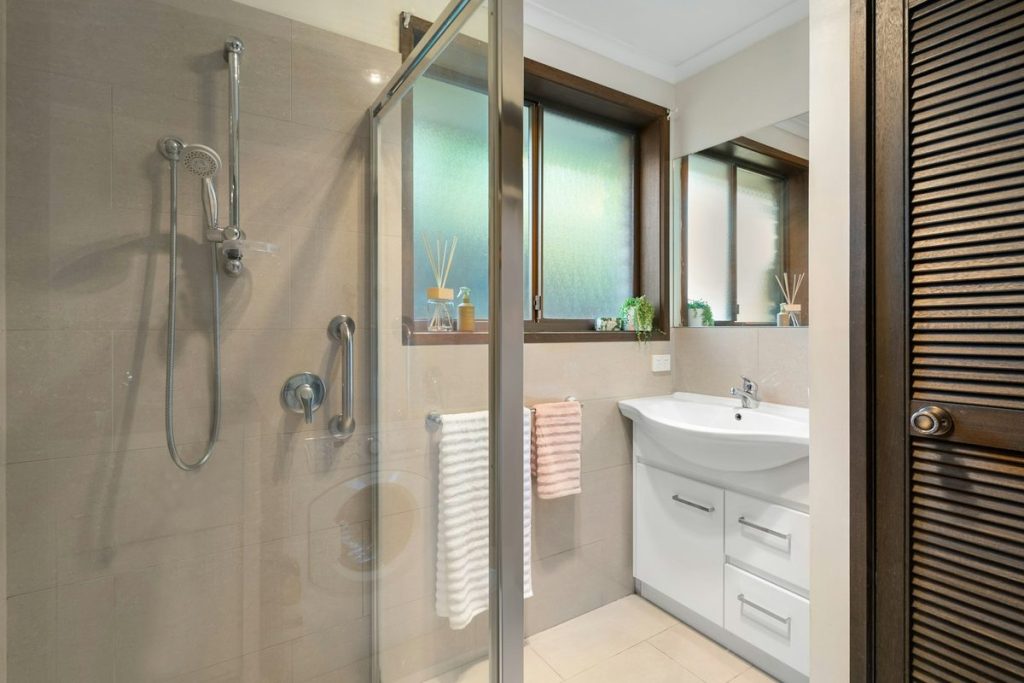
A bar near the controls helps too, since people often lean in to adjust the water.
What about grab bars beside the toilet?
The toilet is often the next stop after the shower, and sitting down and standing up there takes support too.
For public buildings, the ADA Standards call for a side wall bar at least 42 inches long, starting no more than 12 inches from the back wall. They add a rear wall bar at least 36 inches long.
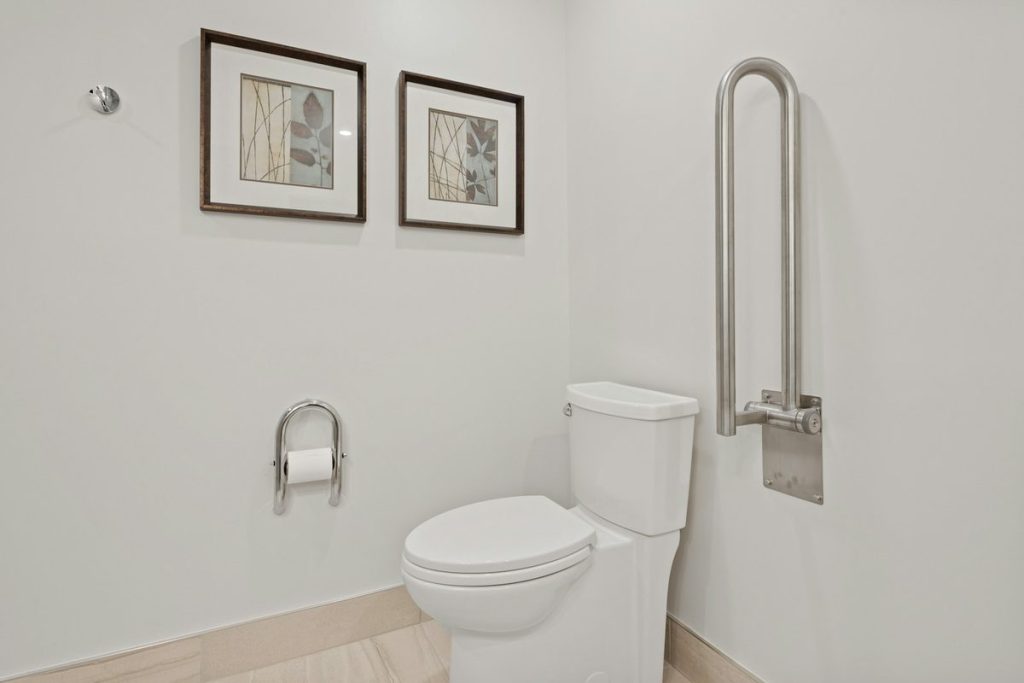
At home, a fold-down bar is an option where there’s no side wall close to the toilet. It folds up out of the way when nobody needs it.
What should you plan before the walls are closed?
Mark every bar position and put solid backing behind the wall before tile or panels go up, so each bar can be anchored into something strong.
Even the ADA Standards accept reinforced walls in place of installed grab bars in the homes they cover, so bars can be added later when they’re needed. That backing is far easier to add during a remodel than afterward.
Big Easy Bathrooms offers custom grab bar installation that meets ADA standards, and our barrier-free showers include grab bars, a level floor and a seat. For the bigger picture, read our guide to creating an accessible bathroom with a barrier-free shower, or contact us and call 504-688-7786 for a free estimate.
Frequently asked questions
Can I use a towel bar as a grab bar?
No. A towel bar isn’t built to hold a person’s weight and can pull out of the wall. Grab bars in public buildings must withstand 250 pounds of force, which gives you a sense of the difference.
How many grab bars does a shower need?
It depends on the shower and the person. A good start at home is one at the entry and one where you sit and stand, with more on the back or control wall if someone needs support while washing.
Can grab bars be added to an existing tiled shower?
Often, yes, if they can be anchored into solid framing or a suitable anchor behind the tile. Drilling tile takes care, and blocking added during a remodel makes future bars much simpler.
Does Big Easy Bathrooms install grab bars?
Yes. Big Easy Bathrooms offers custom grab bar installation that meets ADA standards, and grab bars are part of our walk-in and barrier-free showers.