
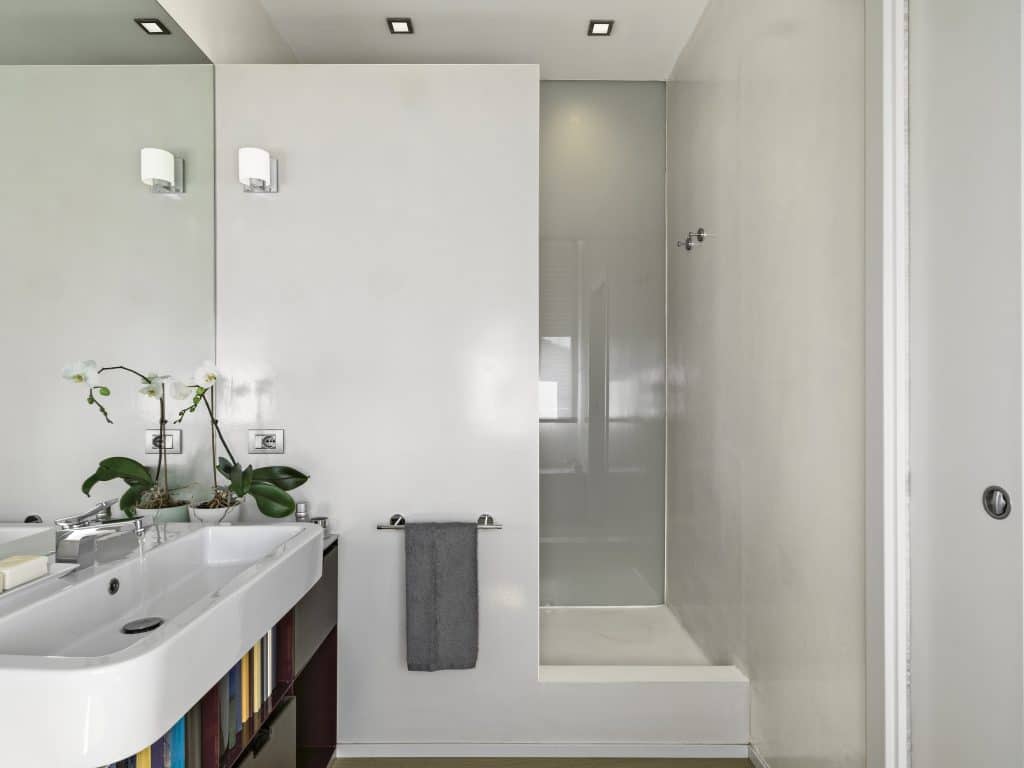
Choosing a bathroom vanity means weighing style against everyday durability, and that trade-off matters more in a New Orleans home than in most places. Year-round humidity puts real stress on cabinetry, so the material behind a vanity’s look matters as much as its finish. Here is what to consider before choosing a style and material for your bathroom.
A bathroom vanity built for a New Orleans home should pair a moisture-resistant material, such as quartz, sealed solid wood, or moisture-resistant plywood, with a style suited to the room’s size and traffic flow. In a humid climate, material choice affects how well a vanity holds up over time, not just how it looks on day one.
Have questions about the best vanity for your space? Call Big Easy Bathrooms at (504) 688-7786.
Common Bathroom Vanity Styles
Most bathroom vanities fall into a few general style categories. Picking one usually comes down to available space and how the vanity should feel in the room.
- Freestanding vanities: Stand on the floor like a piece of furniture, offering full storage underneath and a traditional look.
- Floating (wall-mounted) vanities: Attach directly to the wall, leaving the floor open and making a small bathroom feel larger.
- Pedestal-style vanities: A minimal option with little to no storage, best suited for powder rooms.
- Corner vanities: Fit into an unused corner, a practical option for oddly shaped or historic New Orleans bathrooms.
Which Vanity Material Holds Up Best in New Orleans Humidity?
Bathrooms are one of the most humid rooms in any home, and that holds especially true in a subtropical climate. Some materials handle that moisture far better than others.
- Quartz: A dense, non-porous surface that resists moisture and does not require sealing.
- Solid wood: Durable and long-lasting when properly sealed, though the seal needs to be maintained over time to resist swelling.
- Moisture-resistant plywood: A practical mid-range option that holds up better than particleboard or basic MDF in a humid bathroom.
- MDF or particleboard: The least moisture-tolerant option. If used at all, keep it away from plumbing connections and unsealed edges.
Cypress wood, a material with deep roots in Gulf South homebuilding, is another option some homeowners consider for its natural resistance to rot when properly finished.
Single Sink or Double Sink: Which Fits Your Bathroom?
Vanity width generally determines whether a single or double sink makes sense. Single-sink vanities commonly run in the 24 to 48 inch range, while double-sink vanities typically start around 48 inches and go up from there. A narrower bathroom usually calls for a single sink, while a shared primary bathroom often benefits from the extra counter space of a double.
Choosing a Vanity Style for a Small or Historic New Orleans Bathroom
Many New Orleans homes, from shotgun houses to raised cottages, have bathrooms that were not built with modern vanity sizes in mind. A floating vanity or a corner design can make better use of a tight footprint without sacrificing counter space. Wall-to-wall mirrors and light-colored countertops also help a small bathroom feel more open.
How Vanity Choices Fit Into Your Overall Bathroom Design
A vanity is rarely a stand-alone decision. Its material and finish set the tone for the rest of the room, from the countertop to the hardware to the wall color around it. Homeowners planning a broader remodel often choose the vanity early, then build shower, flooring, and lighting choices around it so the whole room feels intentional rather than mismatched.
Frequently Asked Questions
Quartz and properly sealed solid wood tend to hold up best in humid conditions. Both resist swelling and warping better than particleboard or unsealed MDF, which can break down faster when exposed to constant moisture.
Solid wood generally lasts longer and handles humidity better, provided it is sealed and that seal is maintained. MDF is more vulnerable to moisture damage, especially near the sink and plumbing connections.
Most bathroom vanities are built between 30 and 36 inches tall. Comfort height, around 34 to 36 inches, has become increasingly common because it is closer to standard kitchen counter height.
Available wall width is the main factor. A single vanity works well in bathrooms up to about 48 inches wide, while a double vanity generally needs 60 inches or more to leave enough counter space on each side.
Yes. Because a floating vanity does not touch the floor, it visually opens up the room and makes cleaning underneath easier, both useful traits in a compact bathroom.
Get Bathroom Vanity Guidance for Your New Orleans Home
The right vanity style and material depends on your bathroom’s size, your household’s needs, and how well a material handles New Orleans humidity. If you are weighing your options, our team can walk through what fits your space in person, backed by our satisfaction guarantee on every project. Schedule Your Free In-Home Estimate to get started.
For more design ideas, see our guide to small bathroom ideas or explore designing a bathroom for relaxation. Browse our full range of bathroom remodeling services, or visit our homepage to learn more about Big Easy Bathrooms.