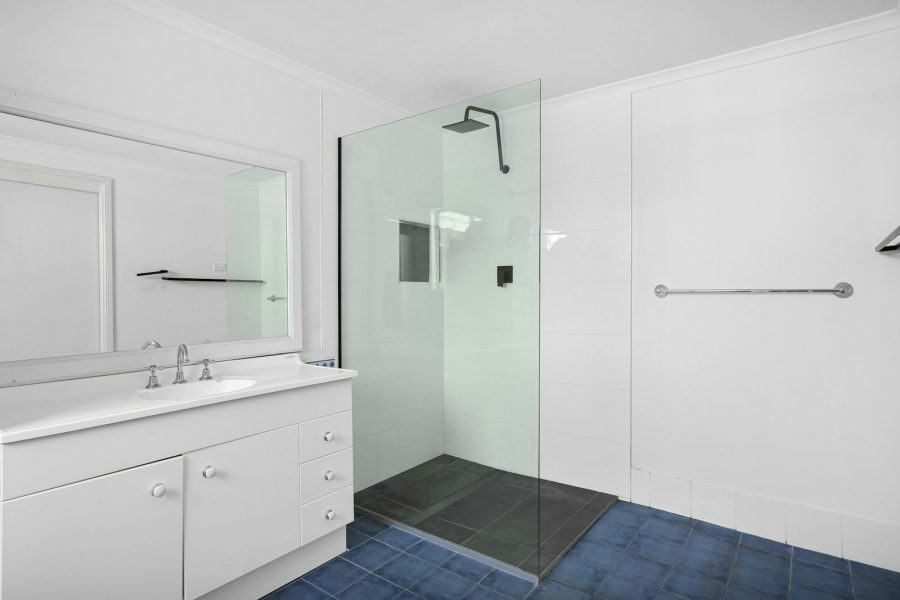
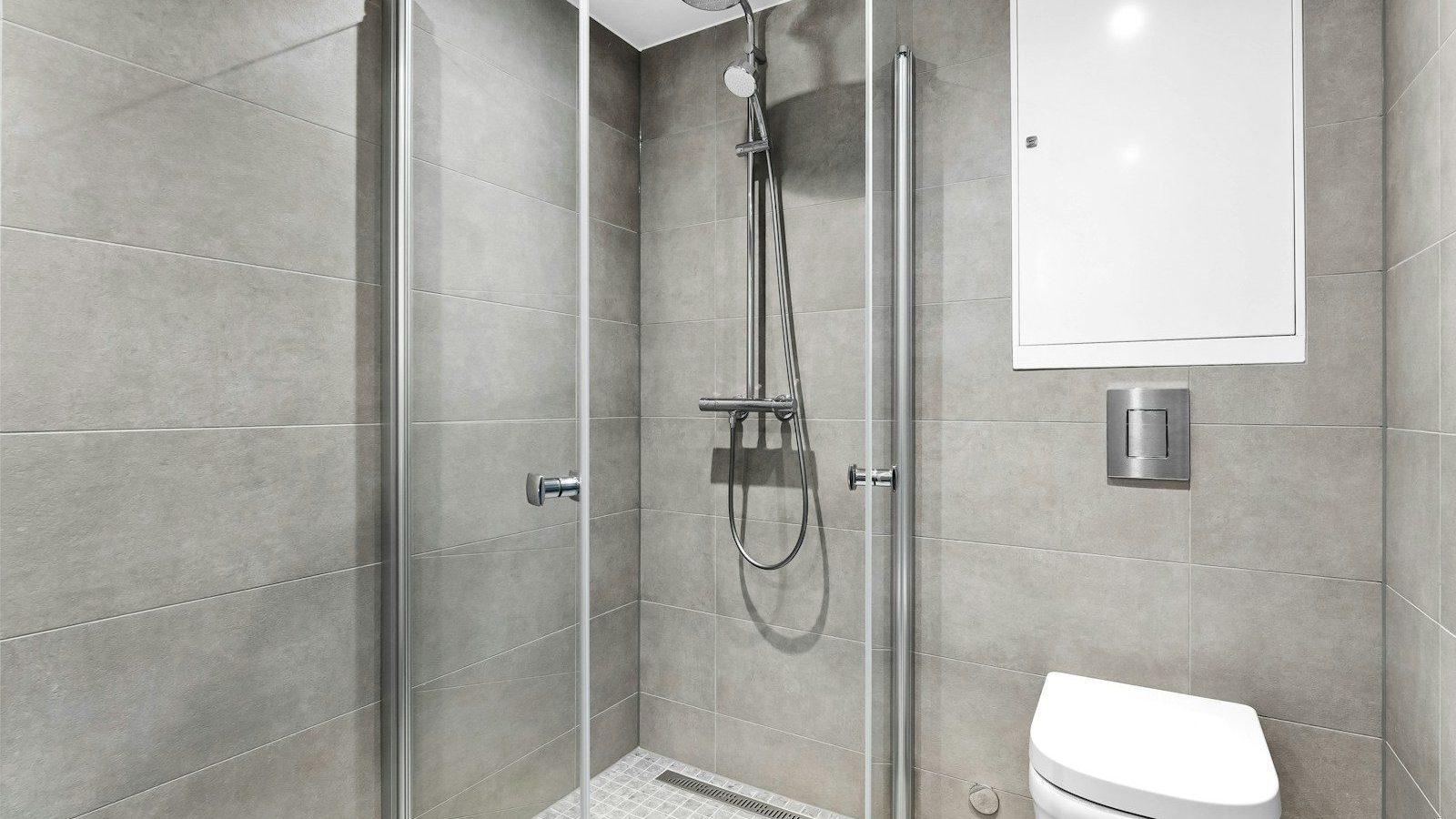
A curbless shower has nothing at the entry to hold water back, so people reasonably ask where the water goes. The answer is in the floor: its slope, where the drain sits and what’s underneath.
This guide from Big Easy Bathrooms explains how a level-entry shower stays dry, what a linear drain does, and what has to happen under the tile before any of it works.
How does a curbless shower keep water in?
The shower floor slopes gently toward the drain, so water runs away from the entry instead of toward the bathroom. With no curb, the slope and the drain do all the work.
The residential code calls for shower floors to slope toward the drain at no less than a quarter inch and no more than half an inch per foot. That’s gentle enough to walk or roll on, and steep enough to move water.
For wheelchair access, the 2010 ADA Standards cap roll-in shower thresholds at half an inch. Those rules are written for public buildings, but they show how low a level entry needs to be.
What is a linear drain, and how is it different from a center drain?
A linear drain is a long, narrow channel with a slim grate, usually set along a wall or across the entry. A center drain is the familiar round or square drain in the middle of the floor.
| Question | Linear drain | Center drain |
|---|---|---|
| Floor slope | One direction, toward the channel | From all sides toward the middle |
| Tile | Suits large tiles on a flat plane | Usually smaller tiles to follow the slope |
| Where it sits | Along the back wall or across the entry | In the middle of the shower floor |
| Underfoot | A flatter surface for feet, wheels and seats | A shallow dip toward the center |
Because the floor tips in only one direction, a linear drain makes a level entry easier to build. For looks and layout ideas, see our article on curbless shower design ideas.
Where should a linear drain go?
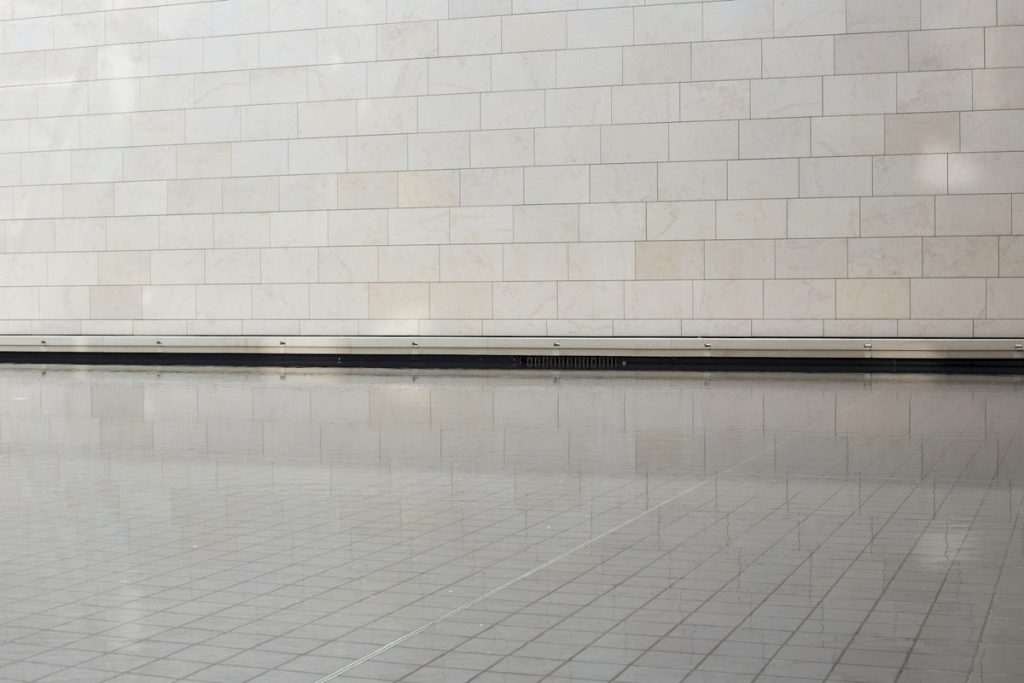
Along the back wall if you want the whole floor to slope away from the entry, or across the entry if you want a line that catches water before it reaches the bathroom floor.
A drain along the back wall keeps the entry high and dry, which suits a shower with a seat on that side. A drain at the entry works well where the shower opens straight onto the bathroom floor.
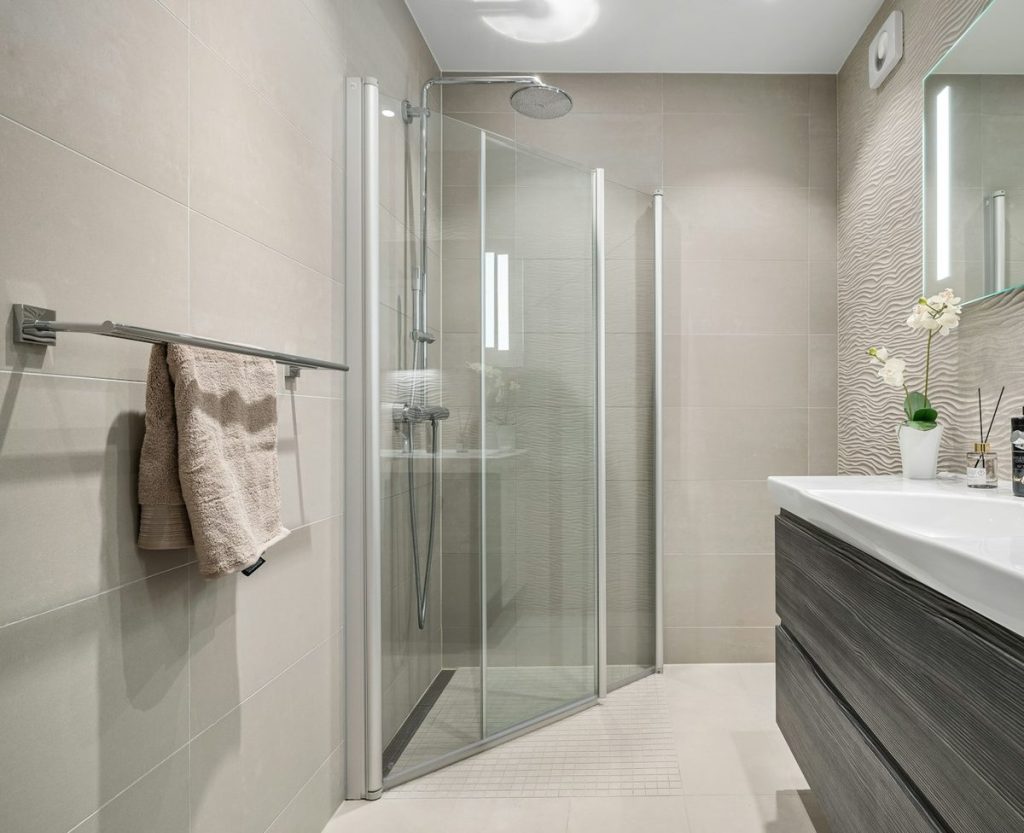
The right spot depends on the shower’s size, where the seat and controls go, and where the plumbing can run under the floor.
What has to happen under the floor?
The shower area is usually set lower than the rest of the bathroom, so the finished floors can meet with no step while the shower still slopes to its drain.
On a wood-framed floor, that can mean lowering the framing where the shower sits. On a concrete slab, it can mean cutting into the slab, which is a bigger job and something to check early.
Under the tile, a waterproof layer has to cover the whole wet area and turn up the walls. For site-built shower floors, the residential code also calls for a water test before tile goes down, so any leak shows up while it’s still easy to fix.
How do you keep the rest of the bathroom dry?
Combine the slope and the drain with a few simple habits and details: a glass panel where it helps, a mat outside the spray and a fan that clears the steam.
- A fixed glass panel blocks spray without blocking the entry.
- A shower head aimed away from the opening keeps water where it belongs.
- A rubber-backed mat outside the shower catches drips.
- An exhaust fan vented outdoors helps the floor dry between showers.
Our barrier-free showers are built with a level, roll-in floor and an efficient drain. To see what your bathroom floor allows, contact Big Easy Bathrooms or call 504-688-7786 for a free estimate.
Frequently asked questions
Do linear drains clog more easily?
Hair and soap collect in any drain. Most linear drains have a lift-out grate and a shallow channel, so they’re easy to reach and rinse during regular cleaning.
Can a linear drain be used in a shower with a curb?
Yes. A linear drain works in any shower, and it’s often chosen for the flat floor it allows. It’s simply most useful where there’s no curb to hold the water back.
Does a curbless shower need a door?
No. Many curbless showers use a fixed glass panel or a curtain instead, which keeps the entry open for a wheelchair or walker while blocking most of the spray.
Can you add a linear drain to an existing shower?
Usually only as part of rebuilding the shower floor, because the slope has to change to run toward the new drain. It’s a job for a shower replacement rather than a quick swap of the grate.
Is a curbless shower floor slippery?
The slope is gentle, so the surface matters more than the angle. Choose tile or a shower base rated for wet areas, and keep the floor clean so soap film doesn’t build up.